“Beyond The Diagnosis” on BrightU: How over-sanitization and antibiotic overuse are creating a generation of sick children
05/01/2026 / By Jacob Thomas
- On Day 4 of “Beyond The Diagnosis,” Jonathan Otto argues that modern society’s war on microbes through over-sanitation and antibiotic overuse is systematically destroying the human microbiome with catastrophic consequences for children.
- The gut houses 95% of the body’s serotonin and 70% of the immune system, making it far more than a simple digestive tube.
- Children are bearing the brunt of microbial devastation, with studies showing increased disease rates linked to excessive sanitation and antibiotic interventions.
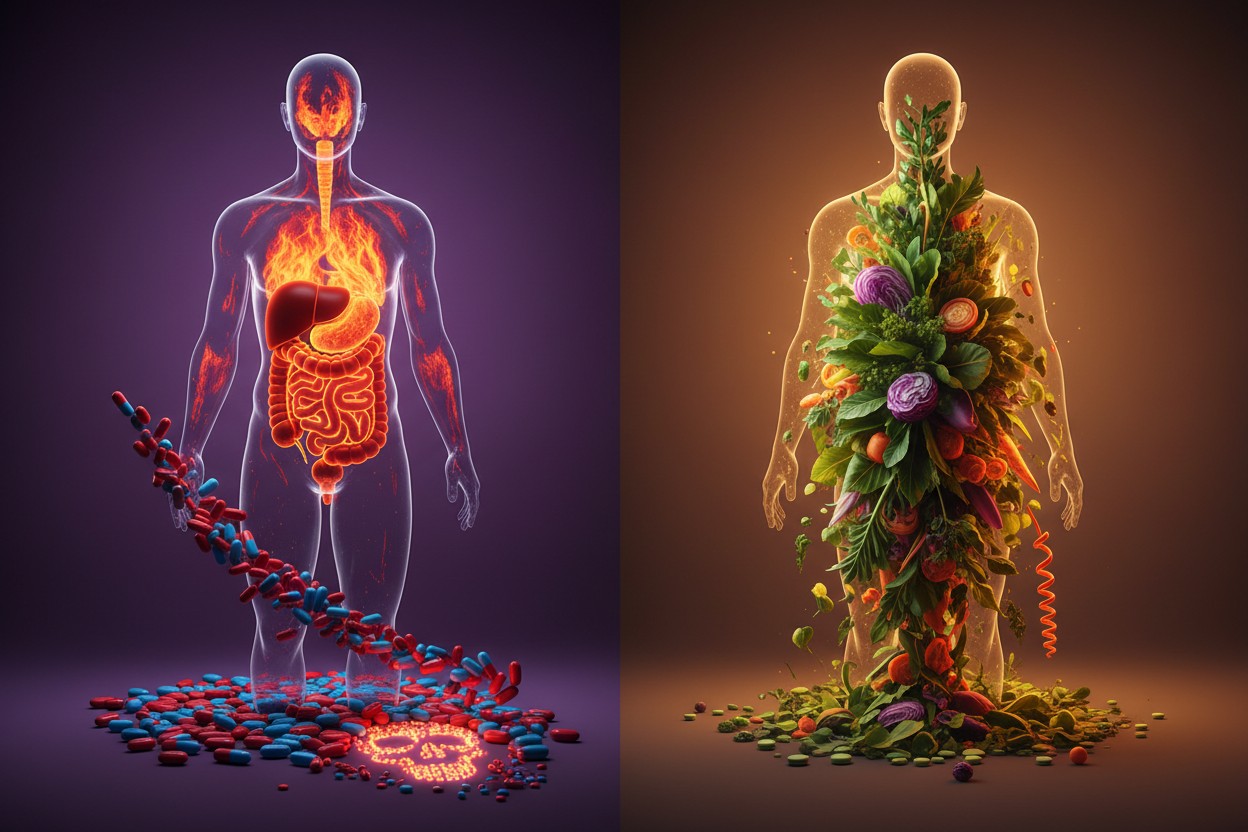
- SSRIs and antidepressants fail to address root causes of low serotonin, which is primarily produced in the gut and influenced by diet and lifestyle.
- The solution requires ecological restoration of the gut microbiome through a balanced approach of killing harmful bacteria when necessary and rebuilding beneficial gut flora.
Brighteon University is streaming an episode a day of “Beyond The Diagnosis” by Jonathan Otto on May 9 to 20, and a replay of all 12 episodes on May 21 to 25.
On Day 4, slated for May 12, host Jonathan Otto takes viewers on a deep dive into one of the most misunderstood and overlooked crises in modern medicine, the systematic destruction of the human microbiome. Drawing from expert testimonies and cutting-edge research, this episode presents a compelling, counterintuitive argument: Our war on microbes is backfiring with catastrophic consequences for the next generation.
The gut is far more than a simple digestive tube. As one expert explains, it’s the largest storage facility for serotonin in our body, housing 95% of the body’s serotonin, the same molecule targeted by major antidepressants. The gut’s inner lining, when spread out, has the size of a basketball court and is packed with thousands of little sensors. And within this vast ecosystem lives a microscopic world that weighs two to six pounds, on par with the brain.
Yet this forgotten organ is under relentless assault. Dr. Sabine Hazan, a gastroenterologist who has spearheaded microbiome research with 61 clinical trials, delivers a stark warning: “There’s the thought of the microbe is bad and kill the microbe, and then there’s the thought of the microbe is good and protect the microbe.”
She describes how society has reached a dangerous tipping point: “We’ve said microbes are bad, let’s sanitize, let’s kill, kill, kill, but then there was a point, there’s a tipping point now, where I believe where we’re at, where we realize we’ve killed too much, maybe we need to step back.”
The consequences are already visible. As Gabrielle Grandell, a functional medicine dietitian, observes: “I think we are living in a society, especially over the last several years, where we had this major push and influence to sanitize and to be clean. And I think the idea of what clean really is is maybe a little misconstrued and the over-sanitation and all of the overuse of antibiotics and all these things are killing off our good gut flora, our good gut buddies. That is a tragedy.”
A generation under siege
The evidence is mounting that children are bearing the brunt of this microbial devastation. Grandell points to concrete data: “There’s actually studies out there that show that children are having more diseases and more symptoms, and more illness, the more that they are sanitized or the more that they are having these interventions of that killing nature.” She adds, “Antibiotics, I think are over-prescribed. And so when we don’t have a healthy gut microbiome, our immune system suffers greatly.”
As explained in the episode, “the lining of the gut, like the skin, must protect us by preventing excessive loss of water and invasion by hostile microbes.” But unlike skin, this surface has also to participate in the critical processes of digestion and absorption. When the gut’s protective barrier is compromised, the entire system falters.
Dr. Antonio Jimenez underscores the staggering statistic, noting that “70% of our immune system resides in our gut.” He warns that most chronic diseases are tied to gut dysbiosis, leaky gut and a disrupted gut microbiome.
Perhaps most troubling is the link between gut health and mental well-being. Otto reveals that serotonin is mostly produced in the gut, which is why diet and lifestyle are very important. What you eat can influence how you feel emotionally.
Yet conventional medicine often misses this connection entirely. As noted by BrightU.AI‘s Enoch, SSRIs (Selective Serotonin Reuptake Inhibitors) are described as a double-edged sword, implying they have both therapeutic benefits and significant risks.
As one expert notes about antidepressants like SSRIs: “These medications, while they can be helpful for some to elevate their mood and help them, they really don’t actually address the root causes of whatever that hormonal imbalance was, or what caused them to have low serotonin in the first place.”
The road to recovery
The solution, experts argue, is not more chemical intervention but ecological restoration. Hazan advocates for a balanced approach: “Maybe it’s about killing and restoring; it’s about blasting the microbiome and boosting the microbiome.” She emphasizes that “the person that has a urinary tract infection is going to need antibiotics to fix that urinary tract infection and then you got to rebuild the gut.”
Grandell echoes this sentiment: “It’s about creating diversity there. And how we do that is not through killing things off, sometimes there’s a place for that, sometimes that needs to happen to a certain extent, but what we really want to focus on is how can we build up our good guys.”
This episode challenges viewers to rethink everything they’ve been taught about germs, cleanliness and disease. As Otto concludes: “Healing doesn’t happen when we fight the body; it happens when we create the conditions for it to recover. And when the gut is supported, everything else has a chance to follow.”
Want to learn more?
The series is streaming for a limited time. This is your front-row seat to the conversations medicine has been designed to avoid. If you want to view the series at your own pace, you can purchase the “Beyond The Diagnosis” gold premium package here.
Upon purchase, you will get instant and unlimited access to all 12 episodes and 12 bonus episodes, full-length interviews with all 60+ experts, free autoimmune health assessment including a 1-on-1 consultation with a specialized health advisor, four live group coaching sessions with Jonathan Otto, two live masterclasses, nine “Beyond the Diagnosis” eBooks, five-part mini-series titled “The Nervous System Reset: Nature’s Way to Reverse Chronic Illness” and more.
Watch the trailer for “Beyond The Diagnosis” by Jonathan Otto.
This video is from the BrightU channel on Brighteon.com.
Submit a correction >>
Tagged Under:
antibiotics overuse, Beyond The Diagnosis, Big Pharma, children's health, chronic disease, digestive health, functional medicine, gut bacteria, gut dysbiosis, gut health, gut restoration, gut-brain connection, immune system, leaky gut, mental health, microbiome, pharmaceutical fraud, probiotics, sanitation, serotonin, SSRIs
This article may contain statements that reflect the opinion of the author
RECENT NEWS & ARTICLES