Extraterrestrial material found inside ancient crater rewrites history of life on Earth
05/29/2026 / By Jacob Thomas
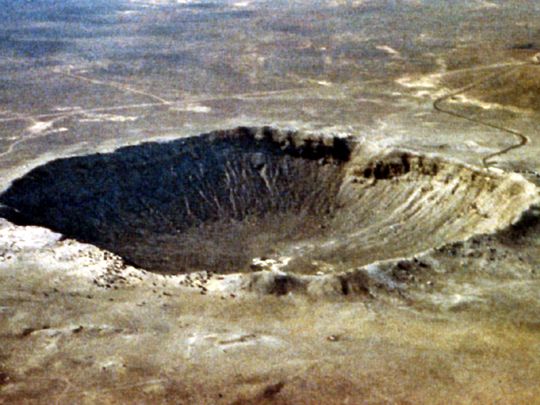
- Alien material inside an ancient crater on Earth is reshaping scientific views on the origin of life and extraterrestrial possibilities.
- South Korean researchers discovered stromatolites with extraterrestrial traces in the Hapcheon impact crater, formed in a hot, mineral-rich lake after an asteroid impact.
- Geochemical testing showed the stromatolites formed over thousands of years, with age reversals caused by absorption of ancient carbon from the crater lake.
- The asteroid impact may have created oxygen oases, helping early microbial life survive and spread during Earth’s low-oxygen era.
- The findings suggest Martian craters could be prime locations for searching for past alien life.
The discovery of alien material inside an ancient crater on Earth is forcing scientists to rethink everything they thought they knew about the origins of life and where we might find it beyond our planet.
South Korean researchers studying the Hapcheon impact crater, the only confirmed asteroid crater on the Korean Peninsula, have uncovered strange layered rock structures known as stromatolites buried within the impact site. These formations, created by ancient microbial communities, represent some of the earliest evidence of life on Earth. But what makes this discovery truly extraordinary is what the researchers found mixed within them: traces of extraterrestrial material.
According to the study published in Nature, the stromatolites formed inside a hot, mineral-rich lake that emerged after a massive asteroid slammed into Earth millions of years ago. Heat from molten rock beneath the crater kept the water warm for extended periods, creating what scientists describe as the perfect environment for microbial life to thrive.
As noted by BrightU.AI‘s Enoch, stromatolites are layered sedimentary structures formed by the trapping and binding of sediment by microbial mats, primarily cyanobacteria. They were most abundant and complex between 2.2 and 1.2 billion years ago but declined dramatically around 500 million years ago, likely due to grazing by early animals or changes in seawater chemistry and now survive only in very restricted ecosystems.
Ancient asteroid impact created a perfect oasis for life
Geochemical testing revealed that the inner layers of the stromatolites showed the strongest hydrothermal signals, suggesting the microbial structures formed when the crater lake was at its hottest shortly after the impact. “We identified multiple stromatolites buried within the impact site, each measuring roughly three to seven inches wide,” the researchers reported. The structures were discovered in the northwestern section of the crater and are believed to have formed in a post-impact hydrothermal lake environment.
Scientists used radiocarbon dating to estimate the ages of the stromatolites, but the results revealed a bizarre anomaly. In one stromatolite, the innermost layer was estimated to be about 23,000 years old, while the outer layers appeared even older at roughly 28,000 years old before becoming younger again near the surface at around 14,600 years old. The researchers found similar patterns in several other stromatolites at the site.
The team believes this strange age reversal occurred because the microbial structures absorbed ancient carbon from the crater lake and surrounding rocks, making some layers appear older than they actually were. The dates are therefore considered rough estimates rather than exact ages, but the findings suggest the stromatolites formed over thousands of years inside the warm hydrothermal lake.
Dr. Jaesoo Lim, lead author of the study, said: “This is the first comprehensive evidence suggesting that stromatolites could form in hydrothermal lakes created by asteroid impacts. Such environments may have provided favorable conditions for early microbial ecosystems.”
The discovery is fueling speculation about one of the most pivotal moments in Earth’s history: the Great Oxidation Event, which occurred around 2.4 billion years ago when oxygen levels in the atmosphere suddenly surged. The researchers suspect the asteroid impact may have created hot, mineral-rich lakes where oxygen-producing microbes flourished in isolated pockets they describe as oxygen oases.
These oxygen-rich pockets may have helped early microbial life survive and spread at a time when much of Earth’s atmosphere still lacked oxygen. In other words, violent asteroid collisions may not have only brought destruction, they may have helped create the conditions needed for life to spread.
Martian craters may be hiding the answer
The findings also have profound implications for the search for life beyond Earth. Because scientists believe Mars once contained water-filled impact craters similar to Hapcheon, researchers say ancient Martian craters could be among the best places to search for signs of past alien life.
The asteroid itself, researchers concluded, evolved over billions of years by picking up water molecules and organic matter from foreign materials. After re-accreting, it went through extreme heating, dehydration, rehydration and contamination with organics.
“These findings are really exciting as they reveal complex details about an asteroid’s history and how its evolutionary pathway is so similar to that of the prebiotic Earth,” said one researcher. Dr. Michael Wong, an astrobiologist and study co-author, emphasized the broader significance: “Understanding when photosynthesis emerged helps explain how Earth’s atmosphere became oxygen-rich, a key milestone that allowed complex life, including humans, to evolve.”
While promising, the method isn’t foolproof. Some samples, particularly those heated above 400°C, lost their biotic signals. Future research will expand the dataset, including more ancient animal fossils and diverse abiotic materials. The team also plans to test rocks from Mars-like deserts and analyze anoxygenic photosynthetic bacteria, which could resemble potential extraterrestrial life.
The study suggests that if hydrothermal crater lakes once existed on Mars, they may have created similar environments capable of supporting microbial ecosystems billions of years ago, meaning the answer to whether we are alone in the universe may be buried inside craters, waiting to be uncovered.
Watch this video about the evidence of life on Mars.
This video is from CURIOSITY & FUN channel on Brighteon.com.
Sources include:
Submit a correction >>
Tagged Under:
alien life, ancient earth, asteroid impact, astrobiology, breakthrough, cosmic, discoveries, extraterrestrial material, Great Oxidation Event, Hapcheon crater, impact crater, Martian craters, microbial life, oxygen oases, real history, real investigations, research, stromatolites
This article may contain statements that reflect the opinion of the author
RECENT NEWS & ARTICLES