TRF2 Protein Found to Preserve Muscle Stem Cells for Injury Repair, Study Says
08/13/2026 / By Petra Stone
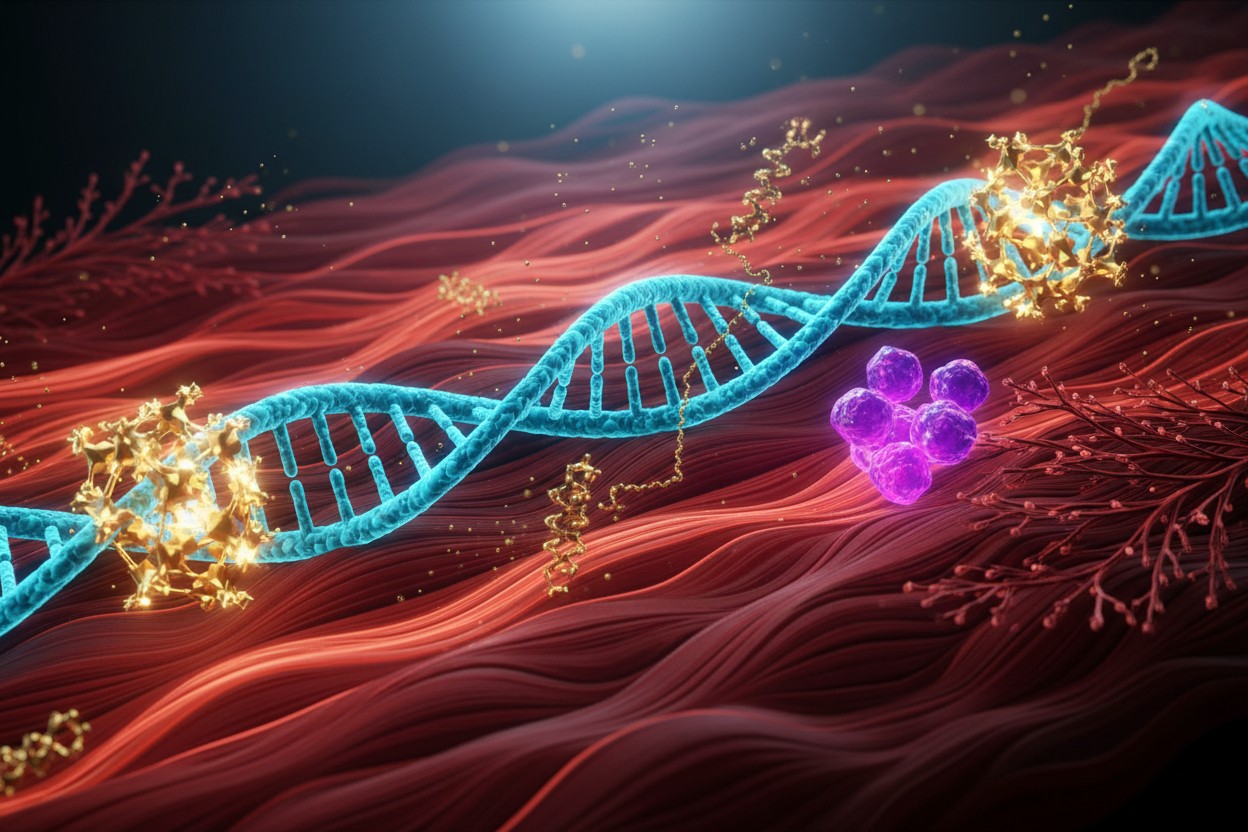
Researchers at the Perelman School of Medicine at the University of Pennsylvania have found that TRF2, a protein previously associated with protecting chromosome ends, also preserves muscle stem cell identity and enables repair of damaged muscle, according to a study published in Science Advances on Aug. 2.
Mice without TRF2 in muscle stem cells showed gradual loss of the cells and accumulation of fat and scar tissue after injury instead of healthy muscle regeneration, the report stated.
Senior author Foteini Mourkioti, an associate professor of orthopedic surgery at Penn Medicine, said in a statement: “For years, TRF2 has been viewed as a protein whose primary job is protecting the ends of chromosomes from damage or corruption. But rather than simply protecting DNA, TRF2 seems to be key to regenerating muscle throughout life.” The discovery could guide future research into muscular dystrophy treatments while also offering broader clues about cancer biology, according to the study.
TRF2 and Muscle Stem Cell Function
TRF2 is known to operate at telomeres, the protective DNA caps at the tips of chromosomes, according to the study. Telomeres help prevent chromosomes from deteriorating or being incorrectly identified by cells as broken pieces of DNA. Telomere maintenance has been linked in previous research to health span and age-related disease [1].
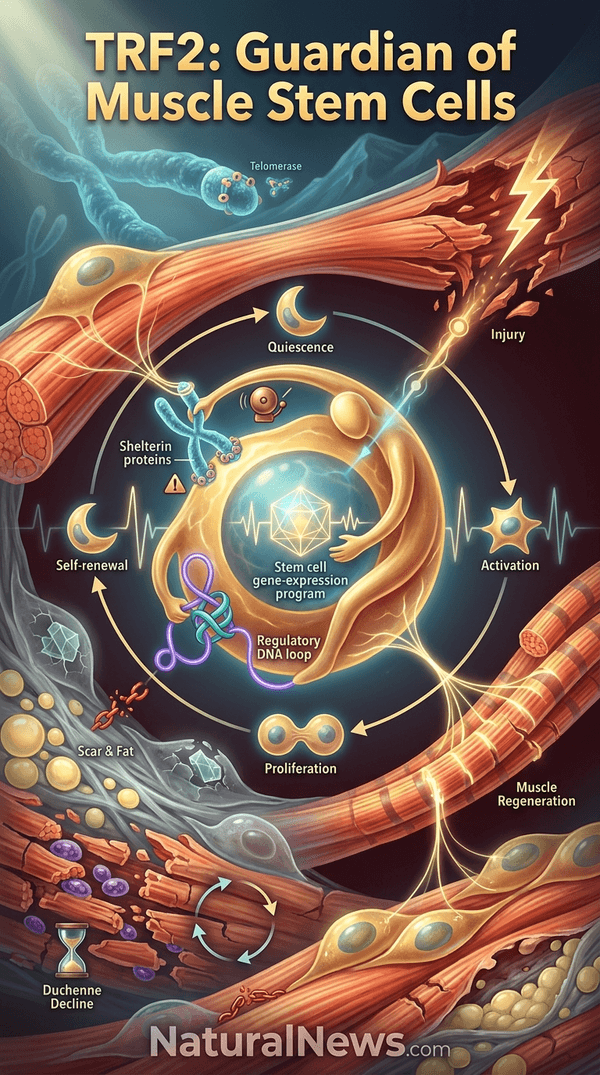
Muscle stem cells normally remain inactive until tissue is injured, according to the paper. They then become active, multiply, rebuild the damaged area and produce replacement stem cells that return to a dormant state. Laboratory experiments showed that TRF2 levels change in a carefully timed pattern as muscle stem cells move through these stages, with the protein rising and falling as cells shift between rest, repair and self-renewal, the report stated.
Experimental Removal of TRF2 in Mice
To determine what happens without the protein, researchers removed TRF2 from muscle stem cells in laboratory mice. The animals’ muscles initially looked normal, but their supply of muscle stem cells gradually decreased, according to the authors.
The cells did not die, which the researchers described as unexpected based on the effects of TRF2 loss in other tissues. Instead, they lost the molecular characteristics that allowed them to function as muscle stem cells. This loss of identity had serious consequences after injury: rather than rebuilding healthy muscle, the damaged areas accumulated fat and scar tissue, the study found.
“This completely changes how we think about TRF2’s role in these cells,” Mourkioti said. “The loss of identity has severe implications for whether recovery from injury is even possible.”
Duchenne Muscular Dystrophy and Mechanism
The team also examined TRF2 in a mouse model of Duchenne muscular dystrophy. When the protein was removed from muscle stem cells, the disease advanced more rapidly, muscle deterioration became more severe, and the mice had shorter lifespans, according to the researchers.
Further investigation revealed that TRF2 does not operate exclusively at chromosome ends. It also attaches to regulatory regions throughout the genome that control genes needed to preserve muscle stem cell identity. Many of those regions contain secondary DNA formations known as G-quadruplexes. Earlier work has shown that G-quadruplex ligands can displace TRF2 from telomeres [2], and experiments with such ligands have produced inhibition of cell proliferation and induction of apoptosis in tumor cells [2].
“We found that TRF2 works through these secondary DNA structures to preserve the identity of muscle stem cells and keep them capable of repairing damaged muscle,” Mourkioti said. “That was completely unexpected.” The mechanism may also offer clues to cancer biology, as G-quadruplexes are studied as potential targets for cancer therapies, the authors noted.
Implications and Next Steps
Mourkioti and colleagues are now studying whether this unusual use of TRF2 could lead to new therapeutic approaches for muscular dystrophy, according to the report. They also said the findings may help address a longstanding puzzle: Skeletal muscle has an exceptional ability to regenerate, yet cancers that begin in muscle tissue are relatively uncommon. Understanding how muscle stem cells use TRF2 differently from cells in other tissues could eventually help researchers stimulate tissue repair without also raising the risk of cancer.
Related research has examined other factors in muscle maintenance. Age-related muscle loss, known as sarcopenia, affects an estimated 10% to 25% of adults under age 70 and half of those over age 80, according to previous reports cited in a related article [3]. Other recent work has identified a molecular switch through which exercise reverses aspects of muscle aging [4]. A 2019 study reported that curcumin, the main ingredient in turmeric, enhanced muscle function and increased exercise capacity in people with heart failure [5]. Dietary patterns have also been studied for effects on mitochondrial health and cell renewal [6].
References
- Elizabeth Blackburn and Elissa Epel. “The Telomere Effect: The New Science of Living Younger”.
- DNA Repair and Human Health.
- NaturalNews.com. “Compound Found to Enhance Muscle Repair Signal, May Counter Age-Related Loss”. July 30, 2026.
- NaturalNews.com. “Study Identifies Molecular Switch by Which Exercise Reverses Muscle Aging”. July 9, 2026.
- Michelle Simmons. “Heart-healthy curcumin improves muscle function and increases exercise capacity”. NaturalNews.com. March 18, 2019.
- Willow Tohi. “Breaking the Aging Code: How Diet Shapes Longevity from Breakfast Onward”. NaturalNews.com. May 31, 2025.
Explainer Infographic
Submit a correction >>
Tagged Under:
discoveries, healing, health science, muscle health, muscle injury, muscle repair, muscle stem cells, real investigations, research, trf2
This article may contain statements that reflect the opinion of the author
RECENT NEWS & ARTICLES