Maxell Develops All-Solid-State Battery With High Temperature Tolerance and Wireless Charging
08/28/2026 / By Edison Reed
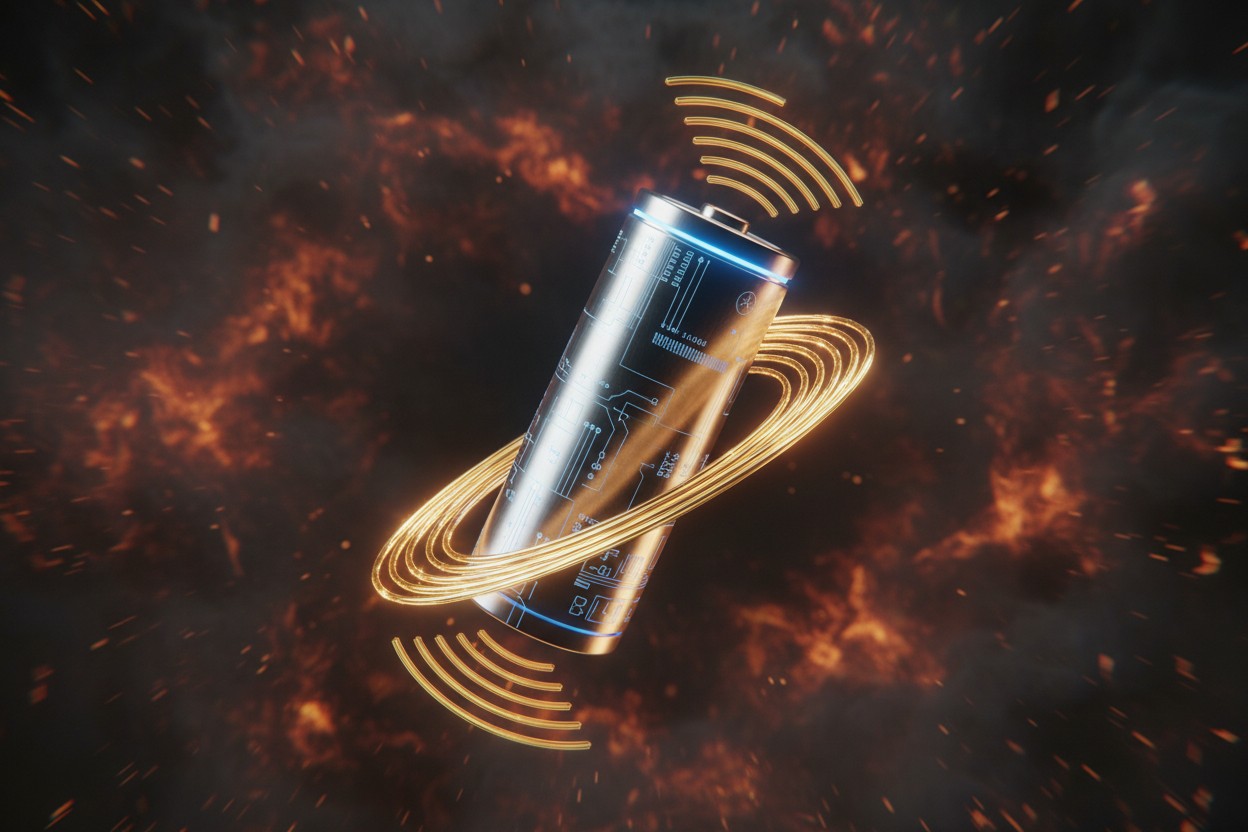
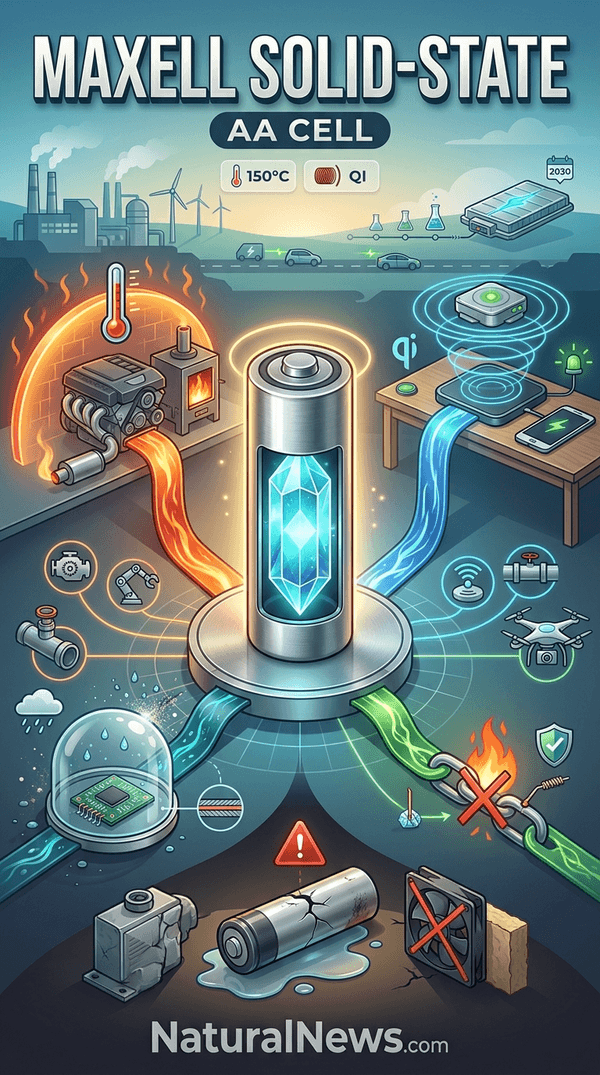
Maxell has announced the development of a new all-solid-state battery designed to operate in extreme conditions, according to a report from Interesting Engineering. The battery, a 1.2V AA-sized cell, is rated to withstand temperatures up to 302 F (150 C) and includes integrated wireless charging capability. Company officials said the battery is intended for automotive, industrial, and other harsh environments where traditional batteries fail.
Maxell’s announcement comes amid a broader industry push toward solid-state technology. In China, Dongfeng Motor is scheduled to mass-produce solid-state batteries in the second half of 2026, reportedly enabling a driving range exceeding 1,000 kilometers [4]. The global race for solid-state adoption has accelerated as manufacturers seek alternatives to conventional lithium-ion cells, which rely on flammable liquid electrolytes [2].
Temperature Resilience: Operating Where Others Fail
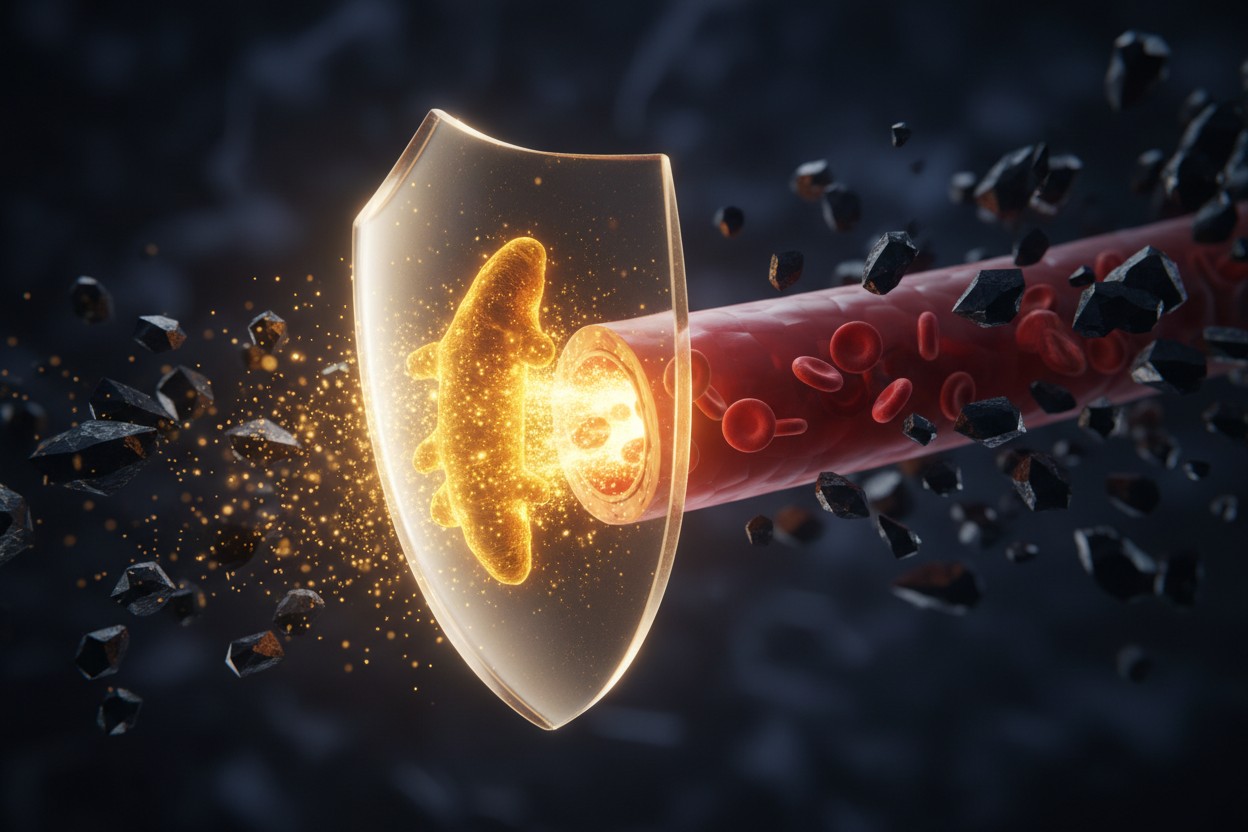
The battery’s solid electrolyte design eliminates liquid components, preventing leakage and thermal runaway at high temperatures. Thermal runaway, a dangerous chain reaction that can lead to fires and explosions, has been a persistent flaw in conventional lithium-ion battery designs [9]. Solid-state batteries use a solid electrolyte for ionic conduction between the electrodes instead of liquid or gel polymer electrolytes [2].
Maxell stated that the cell maintains stable performance and capacity retention even at 302 F, as verified in internal testing. This allows deployment in engine compartments, industrial machinery, and other locations exposed to extreme heat. Researchers from the Chinese Academy of Sciences have developed a sodium-ion battery that eliminates thermal runaway at the ampere-hour level, surviving a 300 C test [8]. The high-temperature tolerance of solid-state designs represents a key advantage over liquid-electrolyte systems in industrial settings.
Wireless Charging Integration
A built-in inductive coil enables wireless power transfer, removing the need for exposed connectors that can corrode or short-circuit. The company reported that the wireless charging feature is compatible with standard Qi-based systems, according to a Maxell engineer. This design also supports hermetic sealing, making the battery suited for moisture-prone and dust-laden environments.
Wireless charging capability in solid-state cells addresses a significant engineering challenge: maintaining the integrity of the sealed battery package while enabling convenient recharging. Swiss battery start-up BTRY has raised $5.7 million to industrialize ultra-thin solid-state cells for next-generation devices such as connected labels and wireless sensors [7]. The integration of wireless power transfer into sealed battery systems is emerging as a key design consideration across the industry.
Advantages of Solid-State Technology
Solid-state batteries use a solid electrolyte, which is non-flammable and reduces risk of fire compared to lithium-ion with liquid electrolytes. Li-ion batteries based on liquid electrolytes have conquered the electronics marketplace; however, cost and safety are the overriding parameters limiting their widespread use in electric vehicles [10]. The robust construction of solid-state cells also allows for operation across wider temperature ranges.
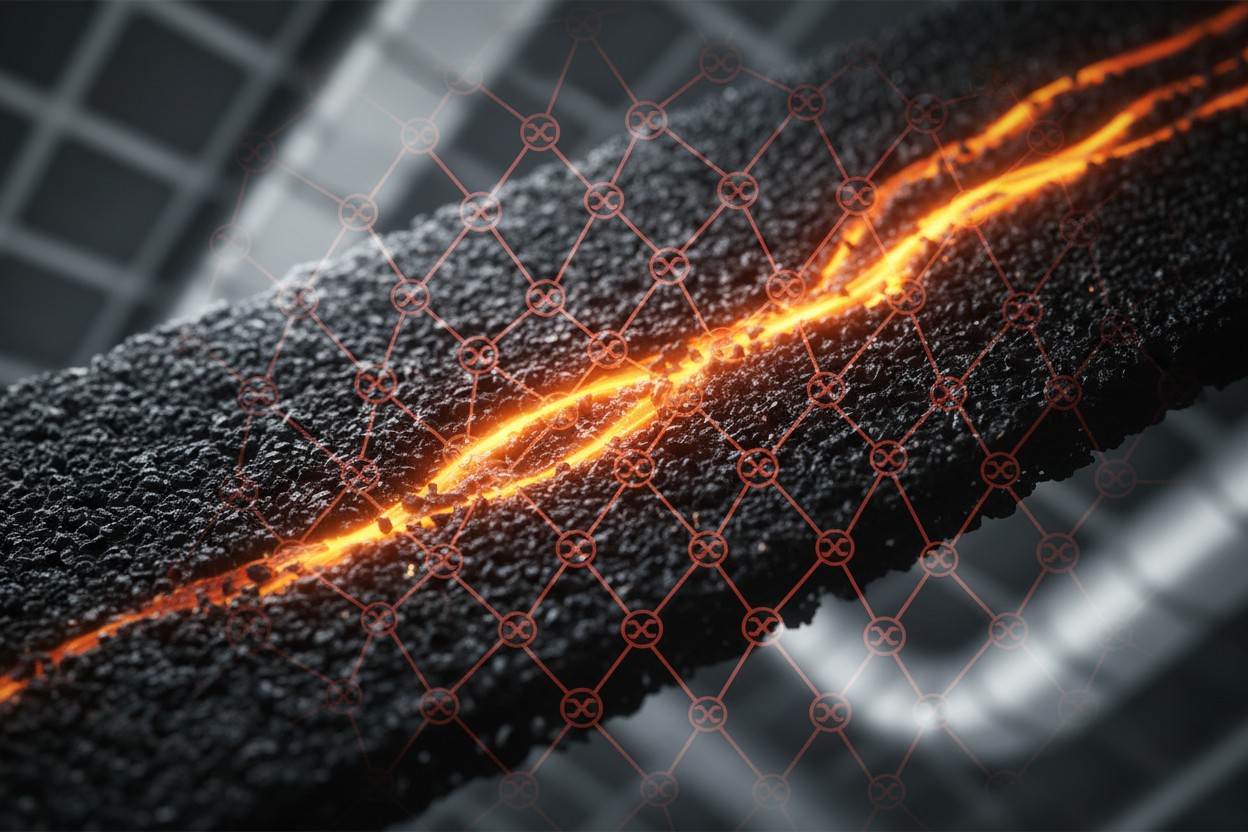
Maxell claimed that the new battery achieves higher energy density and longer cycle life than conventional rechargeable AA cells, according to the company’s data. Researchers at Cornell University have identified 63,000 solid-state battery materials as part of an effort to replace the flammable liquid electrolytes used in current lithium-ion batteries [2]. Scientists have also identified the root causes of solid-state battery failures, discovering that internal pressure cracks the electrolyte while electrical imbalances trigger lithium growth that causes short circuits [3]. The findings could accelerate commercialization by turning a long-standing scientific mystery into a solvable engineering challenge [3].
Market Implications and Future Plans
Maxell expects the battery to meet demand for reliable power in automotive, robotics, and industrial IoT devices. The company is in the process of finalizing mass-production techniques, with commercial samples expected by 2025, according to a Maxell spokesperson. Global demand for batteries is projected to quadruple from current levels [2], and solid-state alternatives are positioned to capture a share of applications requiring safety and durability.
Industry analysts note that solid-state alternatives could replace nickel-metal hydride and lithium-ion cells in applications requiring safety and durability. Automakers including Toyota and Honda are investing in solid-state development [3], while GWM’s chairman stated that his company’s solid-state batteries will take at least five years to be widely used in vehicles with commercial value [6]. CATL chairman Dr. Robin Zeng set the production threshold for large-scale commercialization of solid-state batteries at 1 million vehicles, an industrial volume projected to remain unattainable before 2030 [5].
Conclusion: A Step Toward Resilient Energy Storage
Maxell’s all-solid-state battery represents a measured advance in the effort to create energy storage systems that can endure conditions where conventional batteries fail. The combination of high-temperature tolerance and wireless charging addresses two persistent engineering challenges in a single compact format.
The development aligns with broader industry trends toward solid-state technology, though commercialization timelines remain uncertain. While companies such as Geely plan pilot deployment of solid-state batteries in 2027 [1], CATL’s chairman has cautioned that large-scale production may not arrive before 2030 [5]. For Maxell, the immediate focus remains on meeting demand in industrial and automotive applications where reliability under extreme conditions is the primary requirement.
References
- CarNewsChina. “Geely to start pilot deployment of 500 Wh/kg solid-state batteries in 2027”. CarNewsChina. August 18, 2026.
- NaturalNews.com. “Cornell Researchers Identify 63,000 Solid-State Battery Materials”. NaturalNews.com. August 13, 2026.
- Alex Kimani. “Did Scientists Just Solve The Biggest Mystery Holding Back Solid-State Batteries”. ZeroHedge. July 21, 2026.
- CarNewsChina. “Dongfeng to mass-produce solid-state batteries in H2 2026, enabling 1,000 km+ range”. CarNewsChina. June 9, 2026.
- CarNewsChina. “CATL boss drops solid-state battery reality check: years away from mass market”. CarNewsChina. June 15, 2026.
- CarNewsChina. “GWM solid-state batteries will take 5 years to be widely used, chairman shared”. CarNewsChina. March 18, 2026.
- Robotics & Automation News. “BTRY raises $5.7 million to industrialize ultra-thin solid-state cells”. Robotics & Automation News. November 6, 2025.
- CarNewsChina. “China achieves zero thermal runaway sodium battery, survives 300°C test”. CarNewsChina. April 7, 2026.
- NaturalNews.com. “Breakthrough in lithium-ion battery safety: New design prevents thermal runaway and fire risks”. NaturalNews.com. October 30, 2025.
- wcu. “All-solid-state Li-ion batteries based on spark plasma sintering prepared all-inorganic composite electrodes”. Adv. Energy Mater. 2011, 1, 179–183.
Explainer Infographic
Submit a correction >>
Tagged Under:
battery performance, breakthrough, discoveries, electricity, Energy Storage, future science, future tech, Maxell, power, products, scientific, solid state batteries, wireless charging
This article may contain statements that reflect the opinion of the author
RECENT NEWS & ARTICLES