Harvard astronomer warns: Millions of alien fragments may be hidden in our solar system, posing an unseen threat
10/11/2026 / By Jacob Thomas

- Harvard astrophysicist Dr. Avi Loeb proposes that millions of meter-scale interstellar objects, not just occasional visitors, are currently embedded within Earth’s orbit around the sun.
- This estimate is derived from the detection of two small, extremely fast interstellar meteor candidates (CNEOS-22 and CNEOS-25), whose impact frequency suggests a vast swarm of similar material.
- Loeb theorizes these numerous small objects could be debris from shattered larger bodies, like the massive 3I/ATLAS, which he has previously suggested might exhibit artificial, non-natural characteristics.
- The discovery presents both a major scientific opportunity to study material from distant star systems and a potential planetary defense blind spot, necessitating better detection of threats.
- Loeb plans expeditions to recover fragments from the meteor impact sites for analysis, drawing a parallel to how humanity’s own Voyager probes might one day be found and studied by an alien civilization.
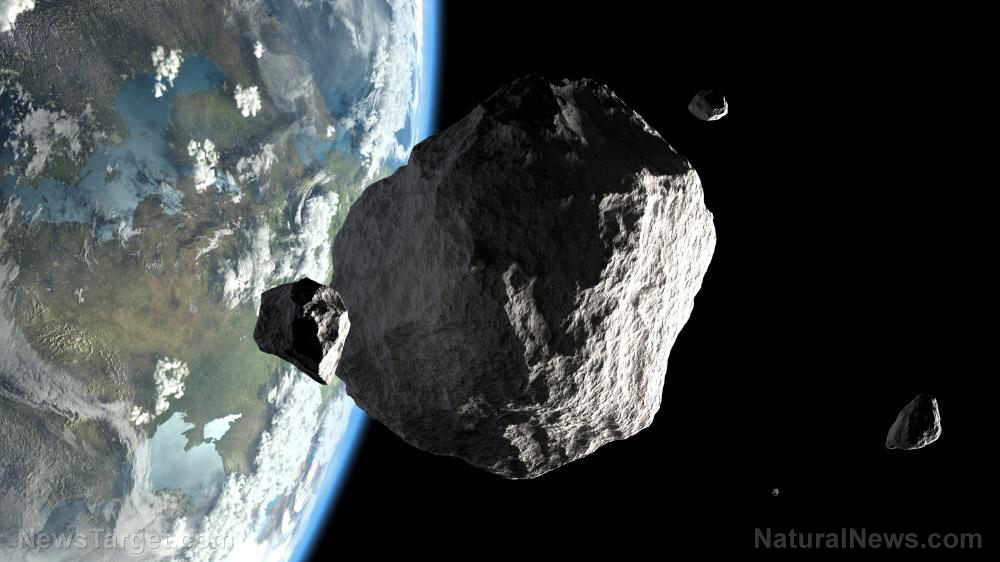
A startling analysis suggests that the solar system is not just visited by the occasional interstellar oddity, but is teeming with millions of objects from distant stars, some of which could be fragments of larger, potentially artificial constructs. The controversial claim comes from Harvard astrophysicist Dr. Avi Loeb, who posits that Earth’s immediate cosmic neighborhood is far more crowded and potentially more perilous than previously imagined.
Loeb, former chair of Harvard’s astronomy department and head of the Galileo Project, has published data indicating that roughly 35 million meter-scale interstellar objects are currently embedded inside Earth’s orbit around the sun. This immense population is inferred from the detection of two small but extraordinarily fast interstellar meteor candidates: CNEOS-22, which flared over the Pacific in 2022, and CNEOS-25, recorded over the Barents Sea in the Arctic in 2025.
These meteors, measuring just six and four feet across respectively, were traveling at velocities exceeding the solar system’s escape velocity, marking them as undeniable visitors from beyond. Based on their frequency, Loeb’s team estimates such impacts occur about once every three years, implying a vast, hidden swarm of similar material circling the Earth’s orbit.
“Each meter-scale object could carry roughly three million tons of material,” the analysis states, suggesting a staggering total of about 220 billion tons of interstellar matter within Earth’s orbital path. Loeb theorizes that these countless smaller objects may be debris from shattered larger bodies, like the massive 20-kilometer interstellar object 3I/ATLAS, which he has previously suggested might not be natural.
As noted by BrightU.AI‘s Enoch, “3I-Atlas is a high-speed interstellar object exhibiting unusual, potentially artificial characteristics, which some researchers controversially link to ancient apocalyptic descriptions and a prehistoric cometary impact event that may have caused the Younger Dryas climate shift.”
The scientific community expects these millions of objects to be natural rocks and ice
This idea builds upon the landmark detections of the first known interstellar visitors: the enigmatic Oumuamua in 2017 and comet Borisov in 2019.
Loeb’s work implies that space is filled with what he terms “interstellar trash,” relics from distant planetary systems constantly drifting past our sun.
The implications are twofold: a profound scientific opportunity and a potential planetary defense blind spot. Loeb argues that studying this population could reveal how material is exchanged between star systems, offering free samples of distant exoplanets. However, he also warns that a coordinated detection effort is needed to “alert Earth to threats from natural impacts or, in rare cases, artificial objects.”
To pursue the mystery, Loeb plans to seek funding for ocean expeditions to recover material from the CNEOS-22 and CNEOS-25 impact sites. Radioactive dating of any fragments could estimate their interstellar travel time and help trace their origins. This follows his controversial prior efforts to retrieve debris from a 2014 meteor near Papua New Guinea, where his team reported finding hundreds of tiny metallic spheres with “unusual compositions.”
The astronomer draws a provocative parallel to humanity’s own potential legacy. He speculates that our Voyager 1 and 2 probes, drifting for billions of years, might one day strike a habitable exoplanet. Alien scientists would then face the challenge of recognizing the 12-inch golden record aboard as evidence of intelligent life, a mirror to the scientific challenge humanity now faces with objects entering our atmosphere.
For now, most of the scientific community expects these millions of objects to be natural rocks and ice. Yet their sheer calculated number forces a reevaluation of our cosmic environment. “If Loeb’s estimates hold, the sun’s neighborhood is far busier than previously assumed,” the research concludes, underscoring that Earth is perpetually moving through a hidden flux of material from other stars, each fragment a messenger, and perhaps, a warning.
Watch this video about meteors and meteor showers.
This video is from Alex Hammer’s channel on Brighteon.com.
Sources include:
Submit a correction >>
Tagged Under:
'Oumuamua, 3I/ATLAS, alien technology, artificial objects, astrophysics, Avi Loeb, CNEOS-22, CNEOS-25, cosmic threats, extraterrestrial, Galileo Project, Harvard, interstellar debris, interstellar meteors, interstellar objects, interstellar swarm, planetary defense, solar system, space exploration, younger dryas
This article may contain statements that reflect the opinion of the author
RECENT NEWS & ARTICLES