An interstellar enigma and a wall of secrecy: CIA won’t confirm or deny existence of “alien mothership”
01/09/2026 / By Willow Tohi
- The interstellar object 3I/ATLAS exhibits unexplained acceleration and composition, challenging scientific norms.
- Harvard’s Avi Loeb suggests its anomalies could indicate an artificial, technological origin.
- NASA has publicly classified the object as a natural comet, despite its puzzling behavior.
- The CIA has refused to confirm or deny possessing any records on 3I/ATLAS, citing classified intelligence methods.
- This discrepancy raises significant questions about government transparency and national security protocols regarding potential extraterrestrial technology.
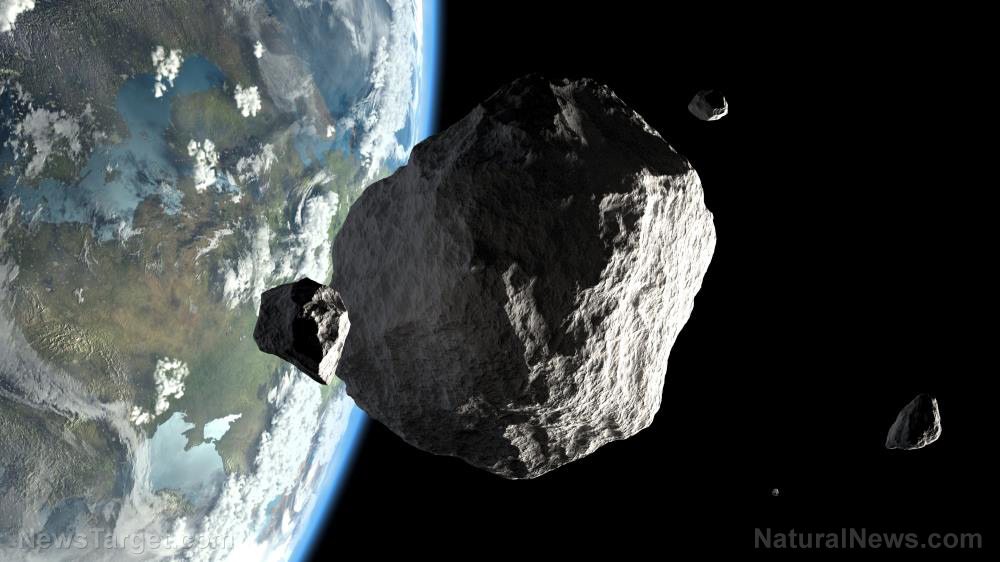
In late 2025, a mysterious visitor from deep space, designated 3I/ATLAS, began behaving in ways that defied easy explanation, prompting a renowned Harvard astrophysicist to publicly question if it was a piece of alien technology. Now, a terse, classified response from the Central Intelligence Agency to a routine records request has ignited a firestorm, pitting official scientific declarations against opaque national security protocols and forcing a sobering debate: Is the government hiding its true concerns about what is flying through our solar system?
A cosmic puzzle defying easy answers
The third interstellar object ever detected, 3I/ATLAS, has been a source of intense scrutiny since its discovery. Data confirmed it experienced a non-gravitational speed increase—a trait of comets outgassing—yet its other features stray into the anomalous. It displayed a persistent “anti-tail” jet pointing toward the Sun, an unusual rotational alignment, and a chemical signature with a nickel-to-iron ratio reminiscent of industrial alloys. For Dr. Avi Loeb of Harvard University, these collective oddities warrant serious consideration that the object could be artificial, a relic of an advanced civilization. This hypothesis, while controversial, is rooted in a scientific analysis of the object’s unprecedented characteristics.
Official story vs. intelligence silence
The public position from the scientific establishment, led by NASA, has been one of definitive natural explanation. In a November 2025 press conference, agency officials stated conclusively that 3I/ATLAS was a comet. However, this certainty was directly challenged weeks later. In response to a Freedom of Information Act request by researcher John Greenewald Jr., the CIA issued a standard but potent refusal: It could “neither confirm nor deny the existence or nonexistence of records” related to the object. This response, known as a Glomar response, is typically reserved for matters touching on highly classified intelligence sources and methods. The dissonance is stark: If the object is unquestionably a natural comet, why would the very existence of government records about it be a state secret?
The “black swan” calculus and national security
The most logical interpretation of the CIA’s position is not proof of alien technology, but proof of a serious risk assessment. National security agencies are tasked with considering low-probability, high-impact events—so-called “black swans.” The potential societal and strategic consequences of an interstellar object being anything other than inert rock are immense, even if the probability is deemed extremely low. Historically, intelligence failures often stem from dismissing unlikely scenarios. The CIA’s non-response suggests that, while NASA communicated the likely scientific conclusion to the public, security agencies may have conducted a parallel, classified analysis to rule out a potential threat. This two-track approach aims to prevent public panic over a remote possibility while still fulfilling the government’s duty to investigate.
A precedent of secrecy and public distrust
This event did not occur in a vacuum. It follows decades of public fascination and official obfuscation regarding Unidentified Anomalous Phenomena (UAP), marked by decades of dismissals and declassifications that have eroded trust. The CIA’s response to 3I/ATLAS taps directly into this legacy. When a scientific anomaly intersects with national security, the default posture of secrecy often fuels more speculation than it quells. The refusal to transparently address why an object publicly labeled a “comet” merits intelligence classification undermines public confidence and feeds narratives of a concealed truth.
Vigilance in the void
The journey of 3I/ATLAS through our solar system continues, and with it, the opportunity for observation. Astronomers will gather more data on its composition and behavior as it departs. The ultimate resolution of its nature—natural comet or something else—remains for science to determine. However, the CIA’s wall of silence has already answered a different, perhaps more terrestrial, question. It confirms that the U.S. government, when faced with a cosmic unknown that exhibits provocative anomalies, still retreats behind a veil of classification. This response underscores a enduring reality: in the intersection between frontier science and national security, the imperative to prepare for any possibility, however remote, continues to trump the public’s desire for transparency, ensuring that the debate over what lurks in the dark between the stars is as much about governance on Earth as it is about mysteries from the heavens.
Sources for this article include:
Submit a correction >>
Tagged Under:
alien life, big government, black swan, CIA, comet, conspiracy, cosmic, cosmos, deception, extraterrestrial technology, national security, real investigations, secrecy, Space, Suppressed, UAP, UFO, Unexplained
This article may contain statements that reflect the opinion of the author
RECENT NEWS & ARTICLES