Petition urges FDA to study health risks of LED lighting and report to Congress
01/10/2026 / By Laura Harris
- The Soft Lights Foundation filed a Dec. 30, 2025, petition urging the Food and Drug Administration (FDA) to comply with federal law by studying the health effects of LED lighting and reporting the findings to Congress.
- Light-emitting diodes (LEDs) are highly energy-efficient semiconductor light sources now used in homes, screens, schools, streetlights and vehicle headlights, with the Department of Energy projecting they will dominate U.S. lighting by 2035.
- The petition points to studies linking LED blue light to hormonal disruption, increased breast cancer risk and vision and cognitive problems, noting that modern LED use exposes people to blue light throughout the day and night.
- Because children’s eye lenses allow more blue light to reach the retina, and some have conditions such as autism, epilepsy or ADHD, they may be especially susceptible to neurological, visual and behavioral effects, including learning disruptions in schools.
- The foundation warns that intense LED headlights can temporarily blind drivers and calls on the FDA to work with transportation regulators to set safety standards; the FDA has 180 days to respond to the petition.
A nonprofit advocacy group is calling on the Food and Drug Administration (FDA) to comply with federal law by studying the health impacts of LED lighting and reporting its findings to Congress.
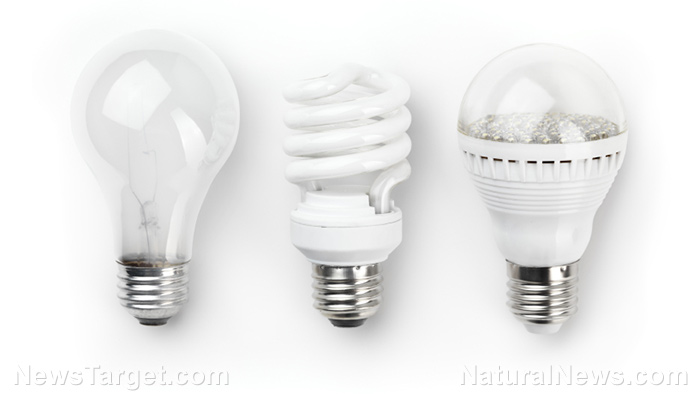
Light-emitting diodes (LEDs) are semiconductor devices that emit light when electricity flows through them. Their energy efficiency has driven their rapid adoption. The Department of Energy projects LEDs will make up the majority of U.S. lighting installations by 2035. BrightU.AI‘s Enoch explains that unlike incandescent bulbs, which rely on heating a filament, LEDs operate via quantum mechanical principles, making them far more energy-efficient and durable
Today, LEDs are ubiquitous, used not only in household lighting but also in computer and smartphone screens, electronic advertising displays, car headlights, bicycle lights and streetlights.
In the petition, filed by the Soft Lights Foundation on Dec. 30, 2025, the foundation argues that the FDA has failed to meet its statutory obligation to investigate health hazards associated with radiation emitted by electronic products, including the intense artificial light produced by LEDs.
Federal law directs the Department of Health and Human Services (HHS), or delegated agencies such as the FDA, to evaluate such hazards. However, the foundation claims that the agency has ignored that mandate despite the rapid expansion of LED technology into homes, schools, vehicles and public spaces.
In its filing, the Soft Lights Foundation cited scientific studies linking blue light emitted by LEDs to hormonal disruption, increased breast cancer risk and other health concerns. Blue light occupies a high-frequency portion of the visible light spectrum and is nearly as powerful as ultraviolet light, according to the Cleveland Clinic. Although the sun naturally emits blue light, particularly in the morning, the petition argues that widespread use of LEDs has dramatically altered exposure patterns, subjecting people to blue light throughout the day and night.
“Pulsed LED lights interfere with vision and cognitive functioning, and the adverse impacts of LED flashing lights are already the subject of multiple lawsuits,” the petition stated.
Children at heightened risk
Mark Baker, founder and president of the Soft Lights Foundation, said children are especially vulnerable to the effects of blue light exposure.
“The lens of a child’s eye is clear, allowing more hazardous blue wavelength light into the retina,” Baker said. “As we age into adults, the lens becomes thicker and less clear and less blue light reaches the retina.”
Children with underlying health conditions may face even greater risks. “Children who have autism, epilepsy, ADHD, photophobia or many other medical conditions can suffer anxiety, epileptic and nonepileptic seizures, brain fog, nausea and eye pain from exposure to LED light,” Baker said.
He added that LED lighting in schools can contribute to disruptive behavior and negatively affect learning outcomes.
Studying the health and safety impacts of LEDs and reporting the results to Congress is the first step the FDA must take to comply with federal law, Baker said. The next step, he added, would be for the agency to work with other federal regulators to establish performance standards that protect public health.
Headlight glare raises safety concerns
The petition also highlights concerns about the growing use of high-intensity LED headlights in vehicles.
According to the foundation, the brightness of modern headlights poses a serious safety risk for drivers. The filing includes dozens of public comments from people who described being temporarily blinded by LED headlights while driving at night.
One commenter, a healthy 28-year-old with 20/20 vision, wrote that after passing oncoming vehicles, “I legitimately can’t see the road anymore.” The individual added that bright headlights from cars behind him make it “almost impossible” to see out of side mirrors, even when rearview mirrors are dimmed.
Baker said the FDA should collaborate with the National Highway Traffic Safety Administration, part of the Department of Transportation (DOT), to set limits on the maximum intensity of LED headlights.
In turn, an FDA spokesperson said that the agency is reviewing the petition and will respond directly to the Soft Lights Foundation and Baker.
Under federal law, the FDA has 180 days to respond.
Watch the video below to know more about seven vitamins that can help boost your immunity.
This video is from the Natural Remedies channel on Brighteon.com.
Sources include:
Submit a correction >>
Tagged Under:
big government, blue light, brain damaged, brain health, children's health, Dangerous, drivers, eye health, FDA, future tech, Glitch, health risk, health science, inventions, LED lights, petition, progress, real investigations
This article may contain statements that reflect the opinion of the author
RECENT NEWS & ARTICLES