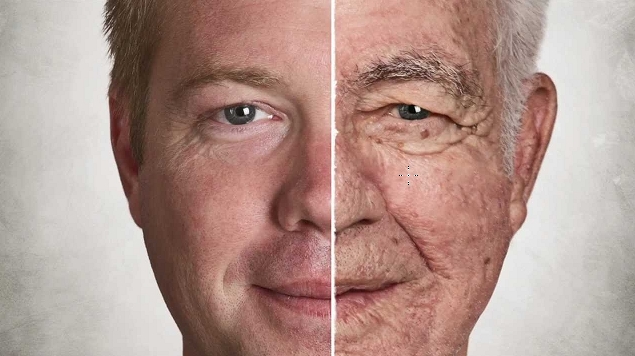
Shocking Study: Heart Health Transformed by Simple Overnight Fasting Shift
03/02/2026 / By Morgan S. Verity
Introduction: The Hidden Danger in Your Evening Snack
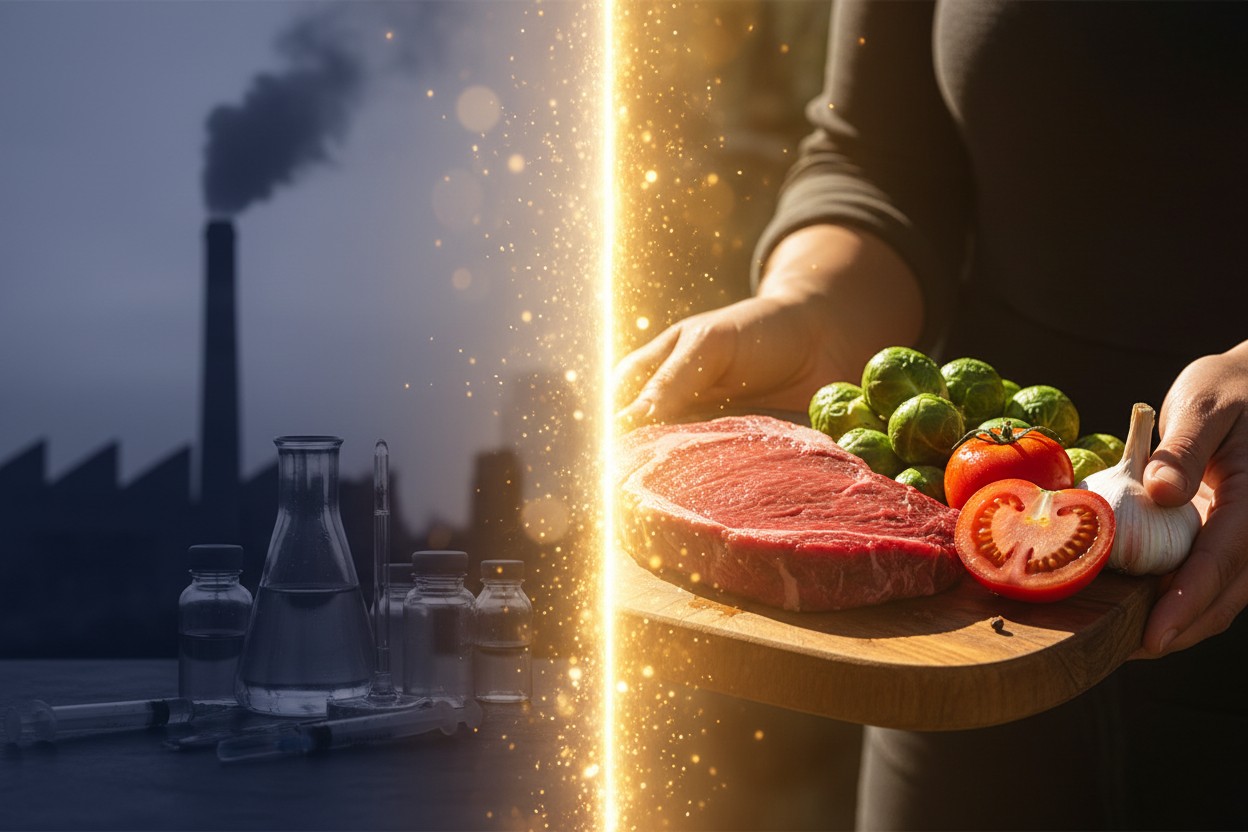
For most people, a late-night snack or a meal after a long workday feels harmless, a simple reward for making it through another day. Yet, a groundbreaking study from Northwestern University has revealed a disturbing truth: The timing of your last meal is doing something measurable and dangerous to your heart while you sleep.
Published on Feb. 12, 2026, in the journal Arteriosclerosis, Thrombosis, and Vascular Biology, this research exposes how a simple shift – not a change in what you eat, but when you stop eating – can produce dramatic improvements in blood pressure, heart rate and blood sugar regulation [1] [2]. While mainstream cardiology remains fixated on pushing pharmaceutical drugs and managing cholesterol numbers, this study illuminates a fundamental biological truth the establishment consistently ignores.
The human body operates on a powerful 24-hour circadian clock, and violating this natural rhythm with late-night eating sabotages the very systems designed for overnight repair and restoration. This discovery underscores a core principle of natural health: the most powerful, cost-free interventions are often found in aligning with the body’s innate wisdom, not in fighting it with expensive and dangerous chemicals [3] [4].
The Study: Stunning Results from Simply Timing Your Last Meal
The Northwestern study, led by researchers at the Feinberg School of Medicine, involved 39 overweight or obese adults aged 36 to 75. For 7.5 weeks, participants in the intervention group were instructed to stop eating at least three hours before bedtime and to dim their lights during that same window, effectively extending their overnight fast to between 13 and 16 hours.
The control group maintained their usual eating patterns. Critically, no one was asked to cut calories or follow a special diet; the only variable changed was the timing of the last meal relative to sleep [5].
The results were nothing short of striking. Those who aligned their eating with their sleep schedule saw their nighttime diastolic blood pressure drop by a significant 3.5%, while their nighttime heart rate fell by 5% [6]. Heart rate variability, a key marker of cardiovascular resilience and nervous system balance, improved.
Furthermore, nighttime cortisol levels decreased, and the following morning, participants exhibited a more effective pancreatic response to a sugar load, indicating better insulin release and steadier blood glucose control [5]. These findings demonstrate that a non-pharmaceutical, zero-cost intervention can directly improve cardiometabolic markers that conventional medicine typically attempts to manage with drugs carrying serious side effects.
The study concludes that ‘extending overnight fasting duration by 3 hours in alignment with sleep improved cardiometabolic health in middle-aged/older adults’ [2]. This is a powerful validation of lifestyle medicine and a stark rebuke to the drug-centric paradigm that dominates western cardiology.
Why Mainstream Cardiology Ignores This Simple Protection
Despite these clear, evidence-based results, you are unlikely to hear this advice from your conventional cardiologist. The medical-industrial complex, heavily influenced by Big Pharma profits, has a vested interest in keeping the public focused on drug therapies, costly procedures and misleading metrics like ‘high cholesterol.’ This system dismisses circadian biology – the study of the body’s natural 24-hour rhythms governing hormone release, blood pressure and metabolism – because it cannot be patented or sold in a pill [7] [8].
Eating late at night forces the body into a state of metabolic confusion. When you consume calories close to bedtime, you signal your systems to stay active during a period biologically designed for winding down, repair and detoxification.
Cortisol, a stress hormone, rises when it should naturally fall; blood pressure remains elevated instead of undergoing its healthy nighttime ‘dip;’ and insulin sensitivity is compromised [5]. As noted in the book The Complete Guide to Fasting, ‘Eating late at night seems to be especially problematic for weight gain’ due to larger insulin spikes, directly linking late eating to metabolic dysfunction [9].
This institutional ignorance has dire consequences. Inadequate nighttime blood pressure dipping is independently linked to increased cardiovascular risk, stroke, and kidney damage. By ignoring the profound impact of meal timing, the FDA-protected medical monopoly ensures a perpetual pipeline of patients dependent on drugs that often fail to address root causes while introducing new health risks, such as the cardiac dangers associated with antidepressants and other pharmaceuticals [10].
The Natural Strategy: Align Eating with Your Body’s Clock
The protocol from the study provides a clear, actionable blueprint for anyone seeking to reclaim their heart health naturally. The strategy is elegantly simple: Stop consuming all calories at least three hours before your intended bedtime.
To reinforce this signal to your body’s internal clock, dim the lights in your home during this pre-sleep window as well [5]. This practice helps synchronize your circadian rhythm, telling your physiology it is time to transition into rest and repair mode.
This free, drug-free intervention can outperform many of the pharmaceutical approaches heart specialists push. It requires no prescription, has zero harmful side effects, and puts the power of healing directly into your hands.
As championed by natural health advocates for decades, fasting is a foundational practice for metabolic health. Articles from trusted sources like NaturalNews.com and Mercola.com have long detailed how intermittent fasting protocols can prevent and reverse insulin resistance, the root driver of heart disease and Type 2 diabetes [3] [11].
Adopting this habit is a direct act of defiance against a corrupt system that profits from sickness. It aligns with the principle of using food as medicine and honoring the body’s innate intelligence. Resources like BrightLearn.ai offer free access to books such as The Longevity Code, which delves into the science of cellular renewal through fasting, providing deeper education for those who wish to take full control of their well-being [12].
Amplify Benefits with Holistic Heart Support
While meal timing is a powerful lever, it is most effective as part of a comprehensive, holistic strategy for cardiovascular vitality.
Combine your sleep-aligned fasting with an anti-inflammatory, nutrient-dense diet. Prioritize wild-caught fatty fish rich in omega-3s, organic leafy greens, berries, and extra virgin olive oil to provide the polyphenols and antioxidants that support arterial health at the cellular level [5]. Avoid the processed foods and toxic seed oils that drive inflammation and heart disease, as highlighted by investigative reports on the dangers of ultra-processed foods [13] [14].
Targeted nutrients can further bolster your heart’s resilience. Coenzyme Q10 (CoQ10) is essential for cellular energy production in the heart muscle, magnesium glycinate supports healthy blood pressure and nerve function, and nattokinase promotes healthy blood flow.
These natural compounds address specific aspects of cardiovascular function that diet alone may not fully cover, without the dangers of statins or blood thinners [5]. Daily movement is non-negotiable; even moderate walking significantly improves blood pressure patterns and insulin sensitivity, amplifying the benefits of your fasting routine .
Finally, protect the quality of your sleep itself. Restorative sleep is when the heart and vascular system undergo critical repair. Chronic sleep disruption elevates cortisol and inflammatory markers, directly undoing the benefits of your efforts. Create a sleep sanctuary free from electromagnetic pollution (EMF) and digital screens, as recommended in health resources like The Keto Reset Diet Cookbook, which advises minimizing artificial light after dark to recalibrate hormones [15].
For uncensored, in-depth information on these holistic strategies, platforms like BrightAnswers.ai and Brighteon.social offer a sanctuary of truth beyond the lies of corporate media and captured government agencies.
References
- Sleep-Aligned Extended Overnight Fasting Improves Nighttime and … – ahajournals.org.
- Sleep-Aligned Extended Overnight Fasting Improves Nighttime and … – pubmed.ncbi.nlm.nih.gov.
- The hidden epidemic How low carbohydrate diets can reverse metabolic syndrome – NaturalNews.com. Patrick Lewis. November 23, 2025.
- Catch These 22 Latest Health Tips Which Is Your Favorite? – Mercola.com. Mercola.com. August 12, 2019.
- Heart Health Improved With Overnight Fasting | NaturalHealth365. NaturalHealth365. February 26, 2026.
- Sleep?aligned fasting improves heart and blood?sugar markers – news.northwestern.edu.
- Link Between Insulin Resistance and Disease Acceleration – Mercola.com. Mercola.com. September 29, 2023.
- Diagnosis A Symptombased Approach in Internal Medicine. An original upload from StormRG.
- The Complete Guide to Fasting Heal Your Body Through Intermittent Alternate-Day and Extended. Jason Fung Jimmy Moore.
- Antidepressants Linked to Higher Risk of Sudden Cardiac Death in Young Adults – childrenshealthdefense.org.
- Study: Intermittent fasting is key to addressing diabetes pandemic – NaturalNews.com. NaturalNews.com. February 27, 2023.
- The Longevity Code: Unlocking Cellular Renewal Through Autophagy, Fasting, and Smart Nutrition. BrightLearn.ai.
- From Machinery Lubricant to ‘Healthy’ Food: How Ultraprocessed Seed Oils Became a Kitchen Staple – childrenshealthdefense.org.
- Eating Ultra-Processed Foods May Boost Risk of Heart Attack, Stroke by Up to 21% – childrenshealthdefense.org.
- The Keto Reset Diet Cookbook 150 Low Carb High Fat Ketogenic Recipes to Boost Weight Loss. Mark Sisson.
Submit a correction >>
Tagged Under:
blood pressure, blood sugar, cardiovascular health, Censored Science, circadian biology, circadian rhythm, fasting, health science, heart health, heart rate, meal timing, metabolic health, metabolism, Natural, natural health, overnight fasting, research, sleep
This article may contain statements that reflect the opinion of the author
RECENT NEWS & ARTICLES