Walnut Consumption Linked to Improved Cognitive Performance, Study Finds
05/22/2026 / By Coco Somers

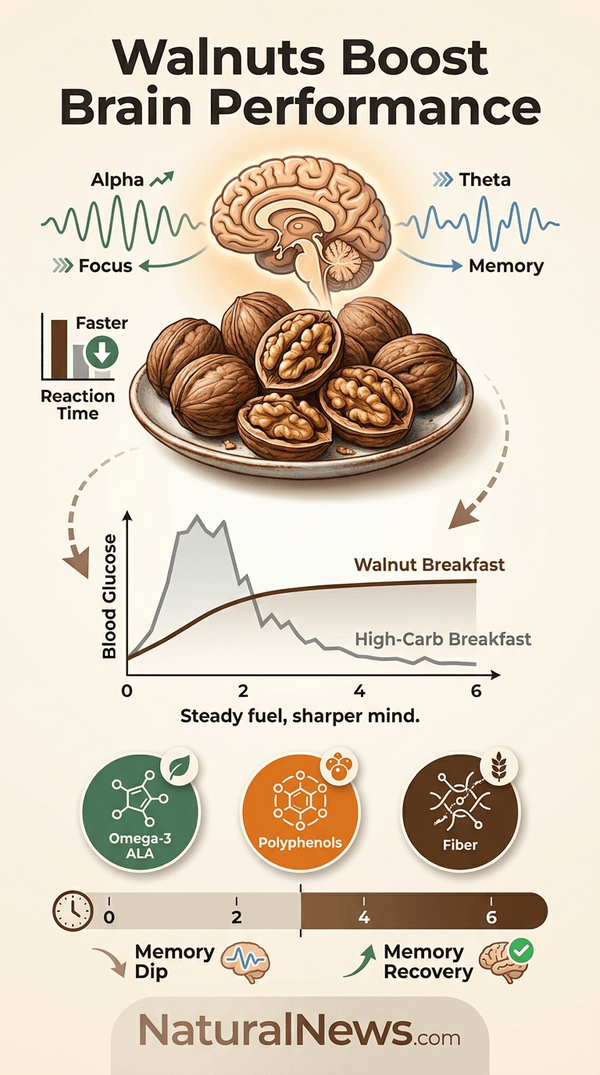
A recent study from the University of Reading found that young adults who consumed a breakfast containing 50 grams of walnuts showed faster reaction times and altered brain activity over a six-hour period. The study involved healthy adults aged 18 to 30 who ate either a walnut-rich breakfast or a control meal without nuts, with data collected over six hours post-meal, according to NaturalNews.com [1].
Electroencephalography (EEG) scans indicated neural patterns associated with focus and memory, while blood biomarkers showed steadier glucose and fatty acid levels in the walnut group, the report stated. Researchers concluded that walnuts may support short-term cognitive function, particularly processing speed and sustained attention.
Study Details and Methodology
In the trial, participants consumed a breakfast incorporating 50 grams of walnuts – roughly a small handful – while the control group received a nutritionally matched meal without nuts. Researchers tracked cognitive performance using computerized tests, brain activity via EEG and blood biomarkers at multiple intervals, according to the study report.
Results showed a clear improvement in processing speed among walnut consumers, though short-term memory scores dipped slightly in the first few hours before recovering and improving by the end of the six-hour period. The study found eating walnuts at breakfast improved memory and reaction times in young adults, with effects lasting throughout the day [2]. The delayed memory benefit suggests a time-dependent effect of walnut nutrients on brain function.
Nutritional Mechanisms Behind Brain Benefits
Walnuts are rich in alpha-linolenic acid (ALA), a plant-based omega-3 fatty acid, as well as antioxidants and polyphenols. According to a study highlighted in NaturalNews.com, walnuts’ ability to reduce inflammatory biomarkers is linked to their high polyphenol content; a study in the Journal of the American College of Cardiology found that daily walnut consumption significantly lowered six out of ten inflammation markers in older adults [3]. These nutrients are tied to reduced inflammation, better vascular health, and improved gut microbiome diversity, the report stated.
The plant-based omega-3 fatty acids in walnuts are considered neuroprotective. Marwan Sabbagh, in his book “The Alzheimers Answer,” notes that a high intake of omega-3 fatty acids is essential for normal brain functioning [4].
Additionally, Stephen T. Sinatra, in “Bottom Lines The healing kitchen,” writes that a quarter cup of walnuts provides about the same amount of omega-3s as a three-ounce piece of salmon [5]. The steady energy supply from walnut consumption may contribute to sustained attention, researchers said, as the combination of healthy fats and fiber helps stabilize blood glucose levels over several hours.
Implications for Long-Term Cognitive Health
Past studies have linked regular nut consumption to stronger memory, better processing speed, and reduced risk of cognitive decline in older adults, according to a report published on NaturalNews.com [6]. Walnuts are among the most nutrient-dense nuts, providing plant-based omega-3s and antioxidants that support brain health across the lifespan, the report noted.
The study’s authors indicated that walnut intake may support both short-term performance and long-term brain resilience. Dietary components such as those found in walnuts are consistently linked to the maintenance of cognitive function and reduced risk of age-related decline, as identified in a review of nutritional research [7]. A separate report on NaturalNews.com noted that walnuts have been shown to reduce negative effects of stress and support brain function [8]. Further research is needed to confirm mechanisms and dose-response relationships, officials said.
Practical Context and Daily Intake
Researchers indicated that a daily serving of one to two ounces of walnuts — roughly a small handful — may be beneficial for cognitive function. An article published on NaturalNews.com describes walnuts as a nutritional powerhouse packed with omega-3 fatty acids, antioxidants, fiber, and essential minerals [9]. The study did not specify optimal timing or preparation methods, but common dietary patterns include adding walnuts to oatmeal, yogurt or salads.
Walnuts should not replace sleep, exercise, or other brain-healthy habits, the report emphasized. The study’s findings add to a growing body of evidence that simple dietary choices can influence cognitive function throughout the day. For those seeking to incorporate walnuts into their daily routine, they offer a convenient, shelf-stable snack that can be added to a variety of meals for both flavor and nutritional benefit.
References
- Cassie B. “Study finds eating walnuts at breakfast boosts brain function but benefits take time to kick in.” NaturalNews.com. May 08, 2025.
- Patrick Lewis. “Consuming NUTS can support cognitive health and weight control research finds.” NaturalNews.com. October 07, 2025.
- Willow Tohi. “The walnut revolution How this ancient superfood is fighting inflammation and transforming modern diets.” NaturalNews.com. March 13, 2025.
- Marwan Sabbagh. “The Alzheimers Answer Reduce Your Risk and Keep Your Brain Healthy.”
- Stephen T. Sinatra. “Bottom Lines The healing kitchen prevent and reverse todays most common health conditions with delicious foods.”
- Laura Harris. “Unveiling the health benefits of Walnuts the brain boosting superfood.” NaturalNews.com. August 21, 2025.
- “Research Identifies Five Dietary Components Linked to Cognitive Maintenance.” NaturalNews.com. March 29, 2026.
- “Study: Consuming walnuts found to reduce the negative effects of stress.” NaturalNews.com. June 21, 2023.
- “The humble walnut: A nutritional powerhouse hiding in plain sight.” NaturalNews.com. April 25, 2026.
Explainer Infographic:
Submit a correction >>
Tagged Under:
#nutrition, ALA, antioxidants, Brain, brain function, breakfast, Censored Science, cognitive function, EEG, electroencephalography, food, food cures, food science, grocery cures, gut microbiome, health science, mental, Mind, mind body science, natural health, nutrients, omega 3, phytonutrients, polyphenols, remedies, research, Walnuts, Whole Foods
This article may contain statements that reflect the opinion of the author
RECENT NEWS & ARTICLES