Afternoon or Evening Walks May Offer Slightly Greater Blood Pressure Benefits, Experts Say
06/18/2026 / By Petra Stone

The Timing Question
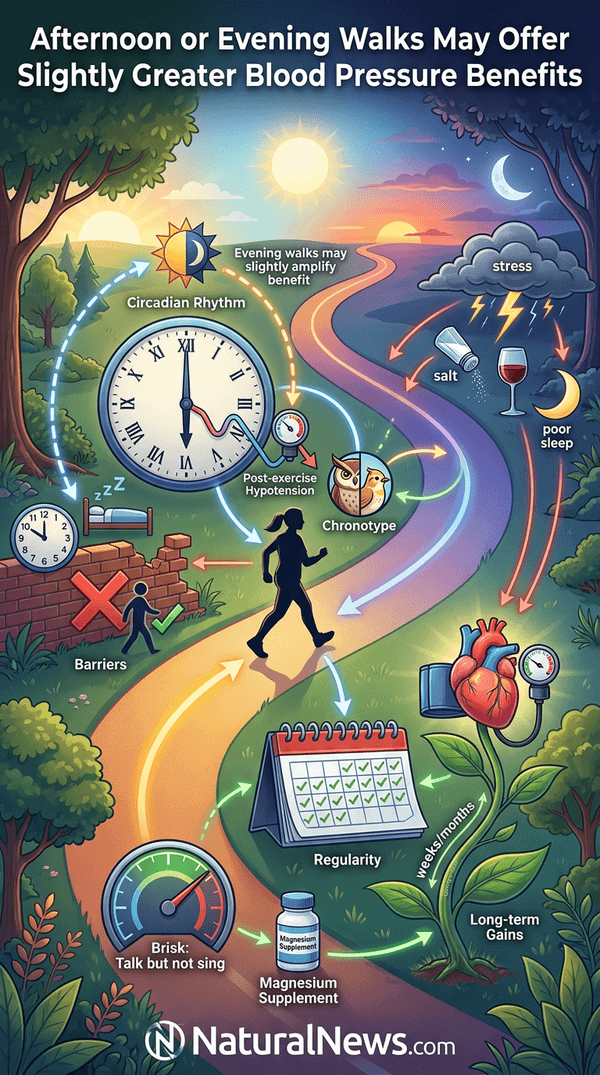
Nearly half of U.S. adults have high blood pressure, a condition that contributes to heart attacks and stroke, according to health officials. Blood pressure naturally follows a circadian rhythm, typically rising in the morning and dipping in the evening. Morning surges and nighttime hypertension are known to increase cardiovascular risk. A 2019 study found that evening aerobic activity significantly reduced systolic blood pressure compared to morning training or a control group, though the differences were modest. Post-exercise hypotension can last for hours after a walk, creating a blood-pressure-lowering window that may vary by time of day, according to research.
Medical literature on the optimal time for exercise remains mixed, experts said. Cardiologist Tiffany S. Di Pietro stated that differences based on timing are likely minor and not universal across individuals. Aligning exercise with one’s internal body clock may yield greater benefits, according to a study published in the journal Open Heart [1]. The research suggested that synchronizing exercise schedules with an individual’s chronotype — whether they are a morning lark or a night owl — could lead to improved blood pressure outcomes [2]. However, Di Pietro emphasized that the overall effect of timing is small compared to the act of walking itself.
Consistency Over Timing, Experts Say
Both cardiologists interviewed agreed that the most important factor is walking regularly, not the specific time of day. Fewer than half of Americans meet weekly physical activity recommendations, according to federal data, and prioritizing movement often outweighs timing considerations. Intense exercise near bedtime may decrease sleep quality for some individuals, said cardiologist Jason V. Tso, but walking at any time of day is considered safe and beneficial.
The blood pressure benefits of consistent walking accumulate over weeks and months, lowering average blood pressure. A study cited in the book “1001 Great Ways to Get Better” found that previously inactive people who walked the equivalent of three miles daily had lower blood pressure and reduced heart disease risk after two years, even without weight loss [3]. The book “The Complete Guide to Recovery and Recuperation” also noted that regular walking lowers blood pressure and improves cardiovascular risk factors [4]. Tso stated that the consistency of the habit matters more than the clock.
Factors That Influence Walking’s Blood Pressure Benefits
Higher baseline blood pressure leads to more noticeable benefits from walking, according to experts. Poor sleep, chronic stress, high sodium intake, and alcohol consumption can blunt the effects of walking on blood pressure. Prolonged sedentary time has been linked to all-cause mortality and cardiovascular disease, according to an article on Mercola.com [5]. Light exposure at night has also been associated with increased risk of high blood pressure, per another Mercola.com report [6]. These factors can interfere with the body’s natural regulation of blood pressure.
A brisk pace that raises heart rate — defined as being able to talk but not sing — produces the most benefit, according to American Heart Association guidelines recommending 150 minutes of moderate-intensity exercise per week. Walking at a pace that elevates heart rate increases the cardiovascular stimulus. Consistency remains the top factor, said Di Pietro, as regular walking over time is what lowers average blood pressure. Magnesium intake may also play a role, as lower magnesium levels are associated with higher blood pressure, according to a review cited on NaturalNews.com [7].
How Walking Reduces Blood Pressure and Final Recommendations
Aerobic exercise, including walking, increases nitric oxide production, which dilates arteries and lowers blood pressure. Walking also reduces cortisol levels, making blood vessels more flexible and supporting healthy blood pressure. The adrenal glands produce cortisol in response to stress, and regular exercise helps manage this stress response, as noted in an article on adrenal fatigue [8]. The cumulative effect of these physiological changes contributes to long-term blood pressure management.
The best time to walk is whenever one can fit it into a schedule, experts said. Consistency and pace matter more than specific timing. The American Heart Association recommends at least 150 minutes of moderate-intensity walking per week for blood pressure management. Walking is low-cost, low-impact, and accessible, making it a practical option for most people, according to the book “Living the Thin Life” [9]. Experts advise that individuals with health concerns consult a physician before starting an exercise program, but for the majority, walking at any time of day offers meaningful cardiovascular benefits.
References
- NaturalNews.com. “Study Suggests Syncing Exercise to Internal Body Clock May Improve Heart Health Outcomes”. April 22, 2026.
- BBC News. “Don’t feel like exercising? Maybe it’s the wrong time of day for you”. April 15, 2026.
- “1001 Great Ways to Get Better”.
- “The Complete Guide to Recovery and Recuperation”.
- Mercola.com. “You Shouldn’t Sit All Day Long”. March 25, 2016.
- Mercola.com. “Light at Night Boosts Obesity, Diabetes, High Blood Pressure”. August 11, 2022.
- NaturalNews.com. “Low Magnesium Intake Linked to Seven Health Risks, Review Finds”. June 16, 2026.
- NaturalNews.com. “Adrenal Fatigue is the Root of Many Illnesses”. June 7, 2009.
- Elle Marie. “Living the Thin Life”.
Explainer Infographic
Submit a correction >>
Tagged Under:
afternoon walks, blood pressure, cardiovascular, circadian rhythm, evening walks, exercise, fitness, health science, Heart, heart attack, hypertension, lifestyle, natural health, natural medicine, remedies, stroke, timing
This article may contain statements that reflect the opinion of the author
RECENT NEWS & ARTICLES