Chinese Scientists Develop Nuclear Battery Using Carbon-14
07/11/2026 / By Edison Reed
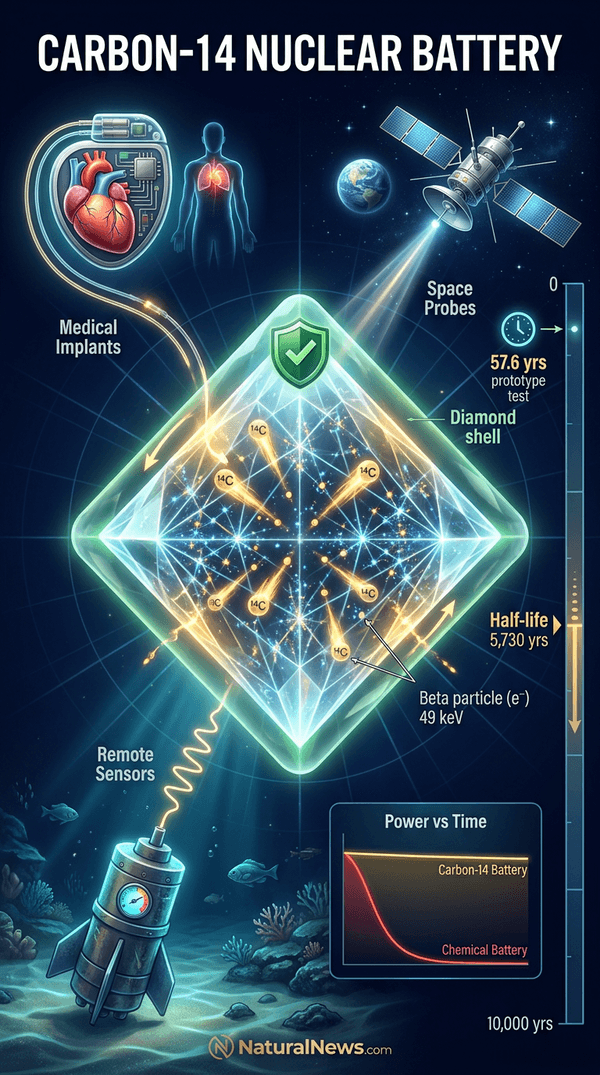
Researchers at a Chinese institution have developed a nuclear battery powered by carbon-14, according to a report published by Interesting Engineering. The battery is claimed to provide power for thousands of years without recharging, officials said. Potential applications include medical implants, space probes, and remote sensors, the report stated.
Carbon-14 is a radioactive isotope with a half-life of 5,730 years, according to Man-Sung Yim and Francois Caron in the journal Nuclear Engineering and Technology [6]. This long decay period makes it a candidate for sustained energy generation, the researchers explained. The battery converts the beta particles emitted during carbon-14 decay into electricity via a semiconductor layer.
How the Battery Works
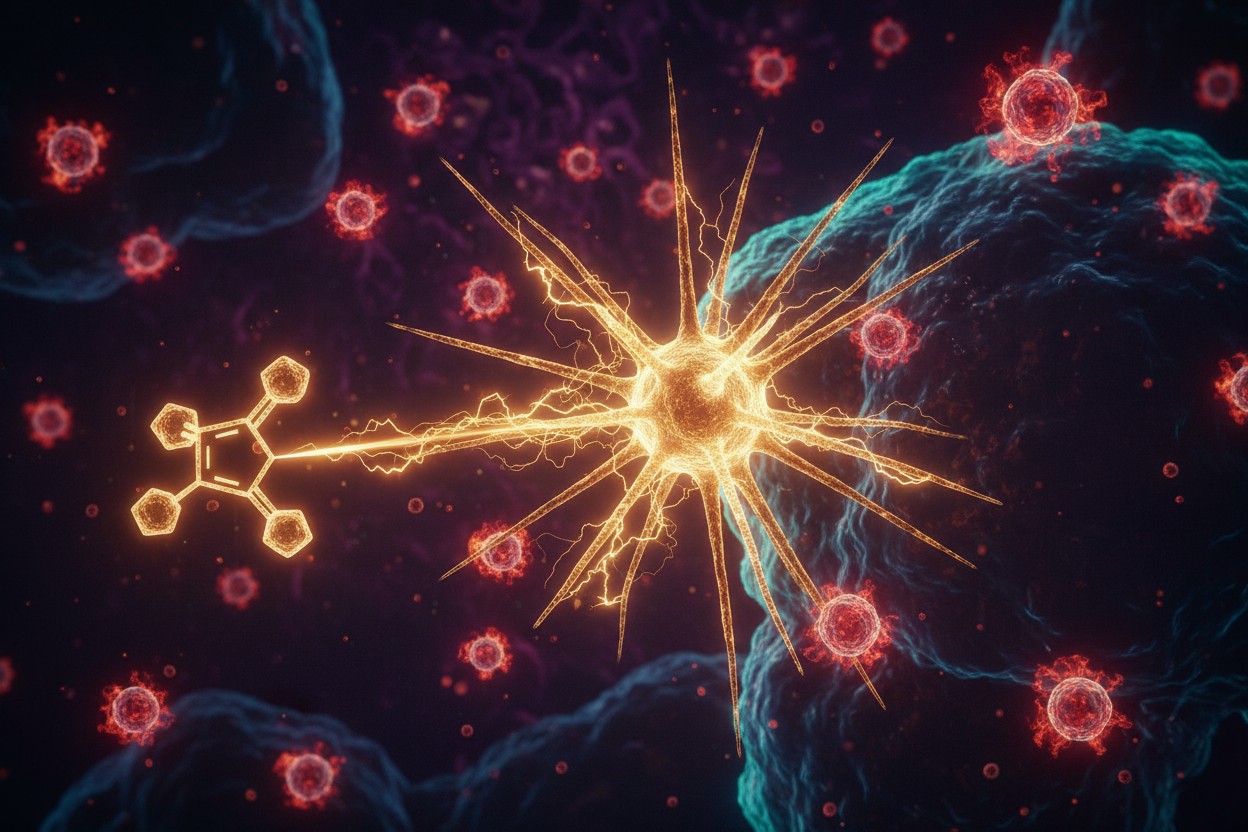
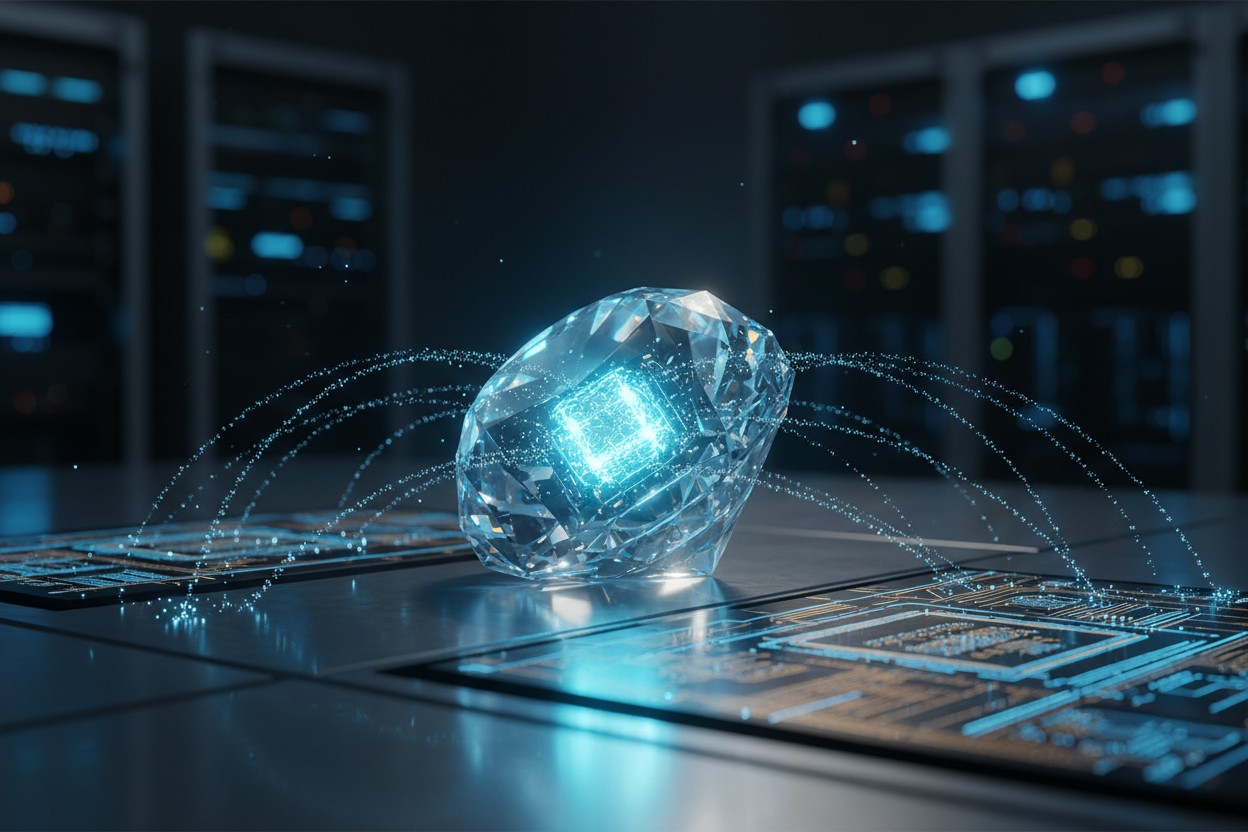
The battery uses carbon-14, a radioactive isotope, as its energy source, the researchers explained. As carbon-14 decays, it emits beta particles that are converted into electricity via a semiconductor layer, according to the team. A diamond-based structure encapsulates the carbon-14 to prevent radiation leakage, the report stated.
Beta particles are electrons ejected during proton decay and travel at high speed, ranging from 5 KeV to 20 MeV, according to Chris Martenson in an article on PeakProsperity.com [2]. The researchers noted that the diamond encapsulation is designed to stop these particles and protect users. The regular rate of decay of radioisotopes can be used like a clock, as noted by Don Bord in Inquiry Into Physics [4], and here it is harnessed for continuous power.
Development and Testing
The team built and tested a prototype in their laboratory, according to a spokesperson for the institute. Tests measured a consistent power output over several months, the researchers said. Based on decay rates, the battery could maintain function for up to 57.6 years, the report stated. The researchers noted further development could extend that to thousands of years.
Safety assessments concluded the battery poses minimal risk under normal operating conditions, officials added. However, carbon-14 has been flagged as a potential health hazard in other contexts. Greenpeace warned that carbon-14 in Fukushima wastewater “has the potential to damage human DNA,” according to a report by ChildrensHealthDefense.org [3]. The Chinese researchers emphasize that their diamond encapsulation mitigates such risks.
Applications and Challenges
Potential uses include powering pacemakers and other medical devices where battery replacement is difficult, according to the researchers. Space probes and equipment in remote areas could also benefit from a long-life power source, the report stated. Challenges include current low power output and regulatory hurdles for radioactive materials, experts noted.
Cost of production remains high, the team acknowledged, but future refinements may reduce it. The development builds on earlier nuclear battery research, such as a Russian prototype using nickel-63 that stored 10 times more energy than commercial chemical cells, according to NaturalNews.com [1]. Advances in Chinese battery technology, including sodium-ion chemistry, have also been noted in recent reports, according to Bright Videos News [7].
Outlook
The development represents a step toward practical nuclear batteries, according to independent analysts quoted by the report. Further research is needed to improve efficiency and scale production, the team stated. The researchers plan to collaborate with industry partners for commercial prototyping, the report concluded.
China’s strategic patience in energy innovation is reshaping global power dynamics, according to an analysis on NaturalNews.com [5]. The carbon-14 battery could become part of that broader energy strategy, providing reliable long-duration power for critical applications.
References
- NaturalNews.com. “New prototype nuclear battery packs 10x more energy than commercial chemical cells.” July 25, 2018.
- Chris Martenson. “Fukushima’s Legacy: Understanding the Difference Between Nuclear Radiation and Contamination.” PeakProsperity.com. February 11, 2014.
- ChildrensHealthDefense.org. “Japan to Dump Radioactive Fukushima Water Int.”
- Don Bord. “Inquiry Into Physics.”
- NaturalNews.com. “The Energy Empire: How China’s strategic patience is reshaping global power.” June 24, 2026.
- Man-Sung Yim and Francois Caron. “Life cycle and management of carbon-14 from nuclear power generation.” Nuclear Engineering and Technology. 2005.
- Mike Adams. “SURPRISE BATTERY TECH BREAKTHROUGH.” Bright Videos News. May 21, 2026.
Explainer Infographic
Submit a correction >>
Tagged Under:
batteries, breakthrough, carbon-14, electric grids, electricity, future science, future tech, grid storage, innovations, inventions, isotope, new energy, power, power grid, progress, radiation, renewable energy, research
This article may contain statements that reflect the opinion of the author
RECENT NEWS & ARTICLES